

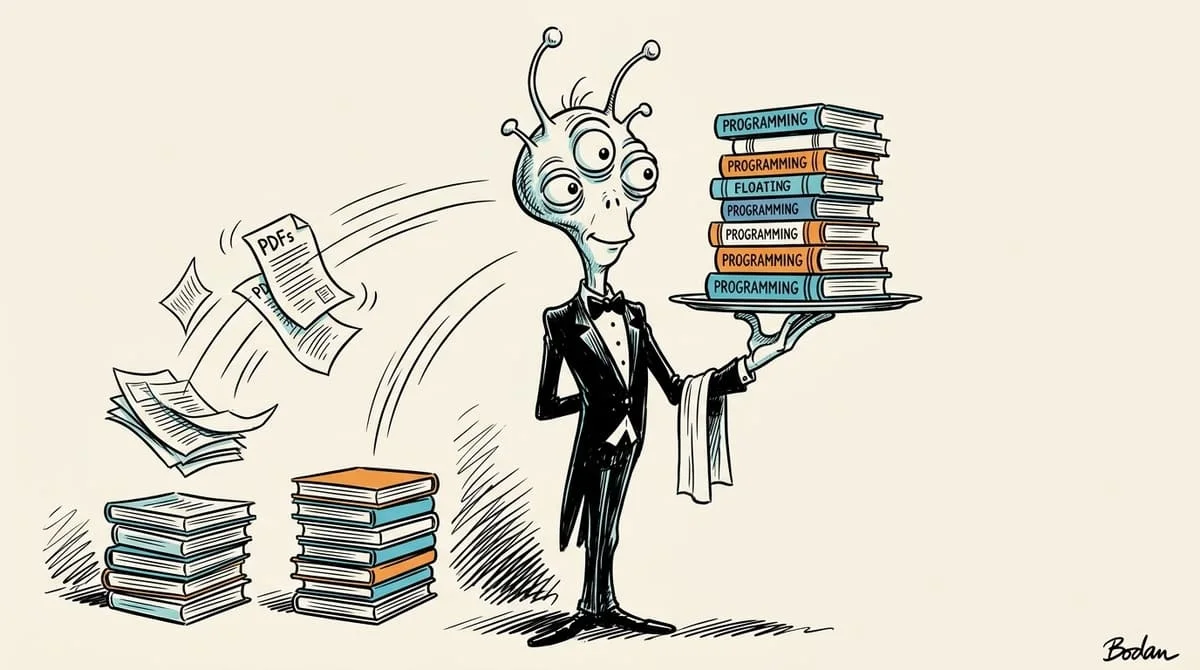
One of these days, I was feeling a little bored, with that familiar Sunday laziness. I opened my programming folder and… well, it was chaos. Algorithm PDFs were scattered in the root, a JavaScript book had ended up in the Docker folder, Arduino was lost among SEO tutorials, and the same edition of a book appeared in two different folders.
The worst part: I knew that somewhere among those hundreds of files there were about 120 books I wanted to read, but I had no idea where to start. Backend? Data? Advanced Python? Everything was mixed together.
To get out of that mess, I considered two options:
- Spend an entire Saturday moving files by hand, folder by folder.
- Ask opencode for help and let it do the heavy lifting.
I chose the second.
Starting with a clear instruction#
I asked in natural language—Spanish, without any unusual commands. Translated into English, my request was:
"Review the folder recursively, organize the files by topic, and create a roadmap for each topic (C Programming, Backend Engineer, Data Engineer, Data Analytics…) in a .md document."
The result was a document of study roadmaps: 24 topics, each with a learning plan organized into phases (fundamentals → intermediate → advanced), with books assigned to the phases where they could add the most value.
- Want to learn C from scratch? It tells you which book to read first.
- Interested in Data Engineering? There is a path with 9 phases and the specific resources for each one.
- Preparing for interviews? There is a roadmap for that too.
It felt like having a mentor who puts together a career plan with learning materials instead of simply handing you a list.
When I said "yes, do it"#
I did not stop there. I asked it to move the actual files, as well as create the roadmap, so the folder structure would match the proposed organization.
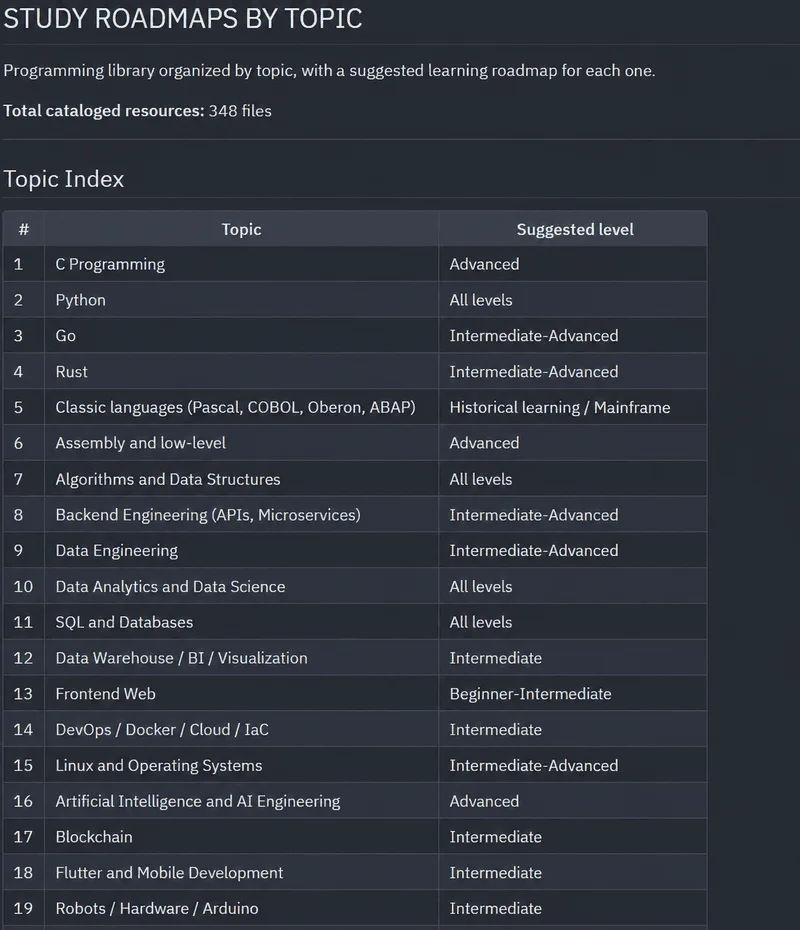
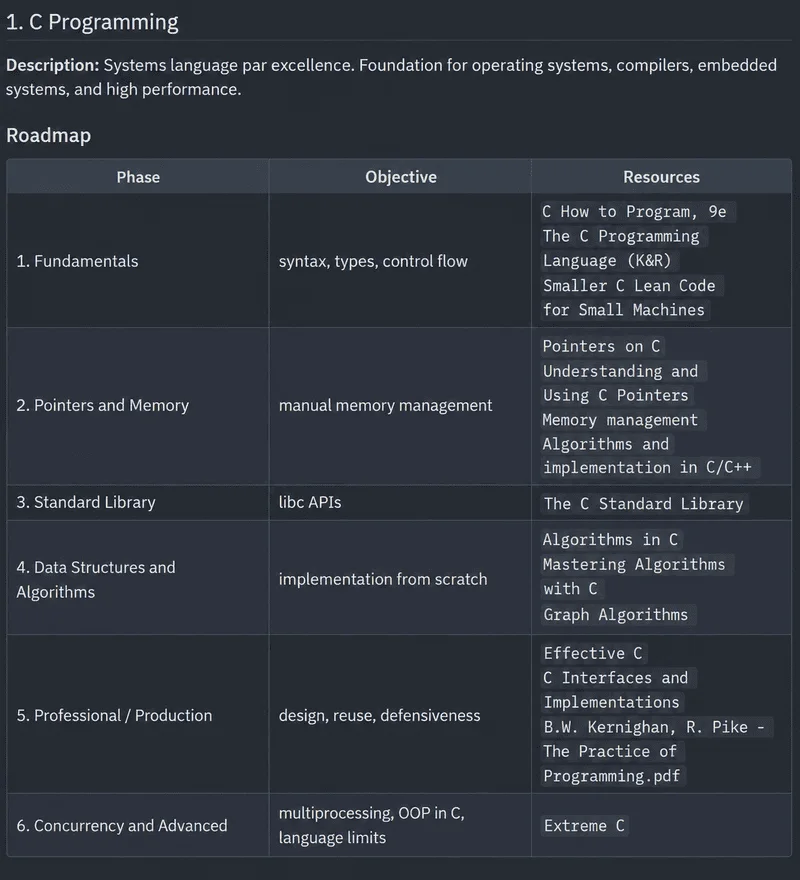
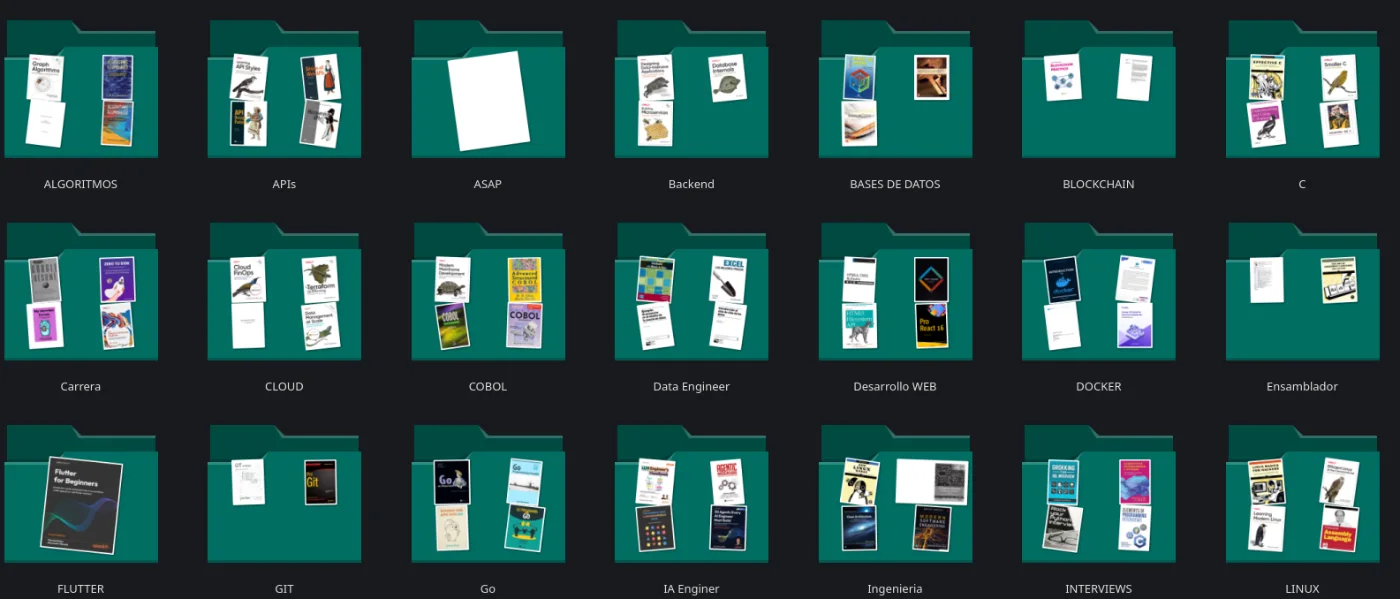
This is where things got interesting. It involved more than simply moving files:
- It detected actual duplicates: it compared file contents using checksums, rather than relying only on names. It found 4 duplicate books I had not realized were repeated.
- It classified resources by their topic: data books that had been sitting in an AI folder moved to
Data Engineer. - It created new folders where needed:
Carrera,Git, andSEO. - It checked the file count: it verified the totals before and after, accounting for the duplicate copies removed.
- It updated the roadmap: as books changed folders, opencode updated the document with their new paths.
The result: I went from over 350 disorganized files to 348 resources organized into 24 topics, with a study plan. In my case, the process took minutes and left me with a library that was much easier to navigate.
Why is this useful, even if you are not a programmer?#
This is not just for people with 350 PDFs. The same approach applies to:
- Your folder of recipes, courses, templates, or work documents.
- Your library of podcasts, audiobooks, or saved videos.
- A shared drive full of disorganized files.
- Building a study plan for a personal challenge or a career change.
What helped me most was connecting the classification to a learning goal. Each folder had a topic, and the document suggested a sequence for studying it. That proposal is a starting point I can review and adjust to my level and interests.
What I learned about getting more out of it#
A good prompt is half the result. Over time, I refined my instructions to help the AI do a better job. At the end of this article, I share improved versions of the prompts I used.
From collecting resources to starting to study#
The folder had long been a collection of files to read "someday." Giving opencode a concrete task helped me turn it into a plan: categories, study phases, and paths to find each resource.
It changed my Sunday afternoon: instead of sorting files, I spent time studying my new C Programming roadmap.
---
🧪 Bonus: the prompts I used, and how to improve them#
Here are English translations of the original prompts, along with the more detailed versions I propose for repeating the process. The latter spell out coverage, the goals of each phase, and the checks to perform on the files.
Prompt 1 — Create the roadmap (original version)#
"Review the folder recursively, organize the files by topic, and create a roadmap for each topic (C Programming, Backend Engineer, Data Engineer, Data Analytics…) in a .md document."
How to improve it:
"Analyze my programming folder recursively, including subfolders and PDF/epub files. Classify all files by technical topic (C Programming, Backend Engineer, Data Engineer, Data Analytics, Frontend, DevOps, AI, etc.). For each topic, create a study roadmap in phases (fundamentals → intermediate → advanced) and assign each resource to the phase where it adds the most value. Write the result to ROADMAPS_POR_TEMATICA.md and include the goal and strategy for each phase. If you cannot determine a resource's topic or level, mark it as pending review. Report the percentage of files cataloged."
Key difference: you ask for every file to be cataloged, for the goal of each phase, and for confirmation of the percentage covered.
---
Prompt 2 — Reorganize the actual files (original version)#
"Yes, do it."
How to improve it:
"Now reorganize the actual files following the roadmap structure: create any missing topic folders, move books into the correct folders, and delete only exact duplicate copies (verify them first by comparing their contents, never by name). Before moving anything, show me the planned moves in a table for approval. When finished, verify that the total file count changed only because duplicates were removed, and update the paths in the roadmap."
Key difference: you ask for a plan to approve beforehand, prevent different versions from being deleted 'just in case,' and ensure the final document stays in sync with the new structure.
---
Prompt 3 — Bonus: extend the project#
"Create a Markdown checklist file for each topic with books read, books still to read, and a notes field so I can track my study progress."
Why use it: it turns your library into a learning progress tracker, a natural next step after creating the roadmap.
---
Written on a Sunday afternoon that ended with a study plan.